Saving teeth · Endodontics under the microscope · Prague
Our priority is to save the tooth.
Before we propose an extraction, we look for a way to keep the tooth. We work under the microscope with CBCT diagnostics — and if the prognosis is uncertain, we tell you beforehand.
We speak English. The booking form is in Czech — email or call us if you prefer.
Our philosophy
Your own tooth has a value an implant cannot give.
An implant is an excellent way to replace a missing tooth, but it is not automatically better than a well-treated natural tooth. If a tooth has a reasonable long-term prognosis, we try to keep it.
So saving the tooth is our first question and an implant is a solution, not a goal. What decides is the prognosis — not an effort to keep the tooth at any cost.
- —Price: root canal treatment under the microscope from 13 000 CZK (≈ €520), depending on the number of canals.
- —Length: usually one longer visit; two for more complex anatomy.
- —Comfort: under local anaesthesia; sedation is also possible.
- —Follow-up: checked at every regular visit — the aim is healing of the tissue around the root.
Clinical cases
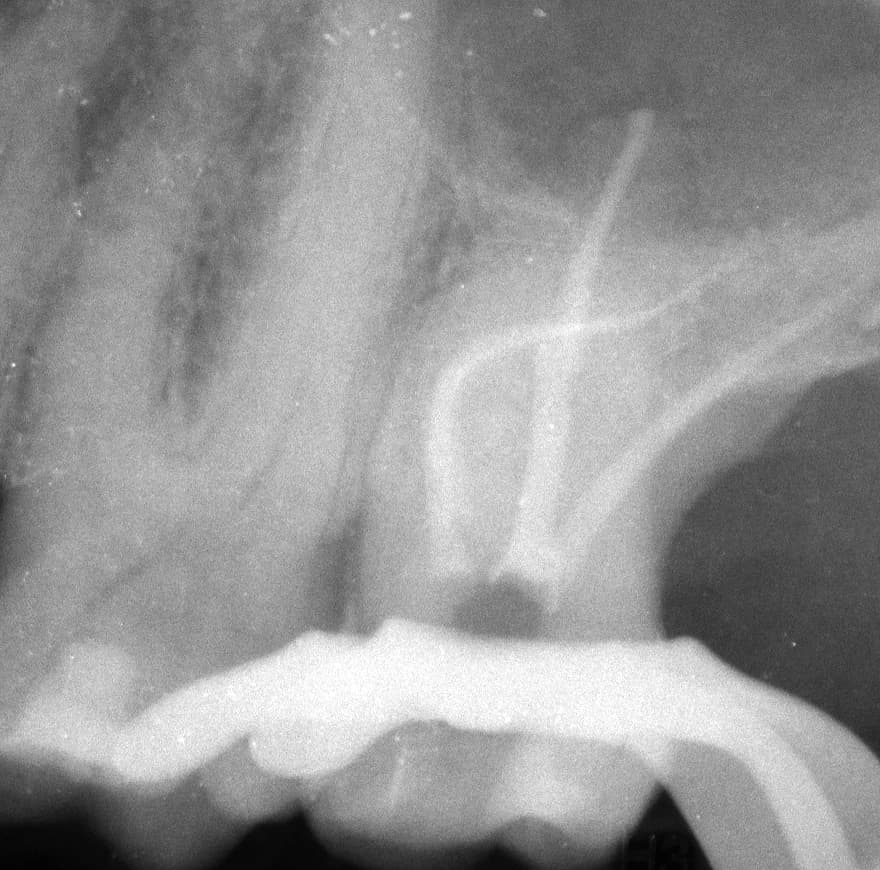
Saved teeth on X-ray
Drag the slider to compare the X-ray before and after treatment. We only publish images with the patient’s consent.
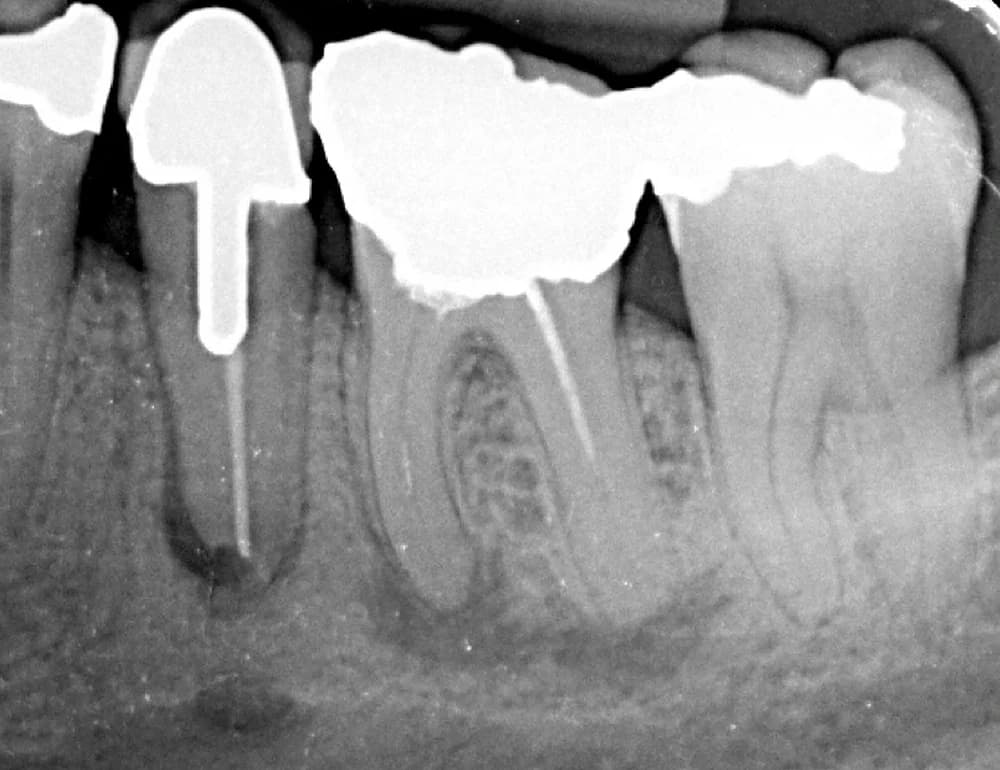
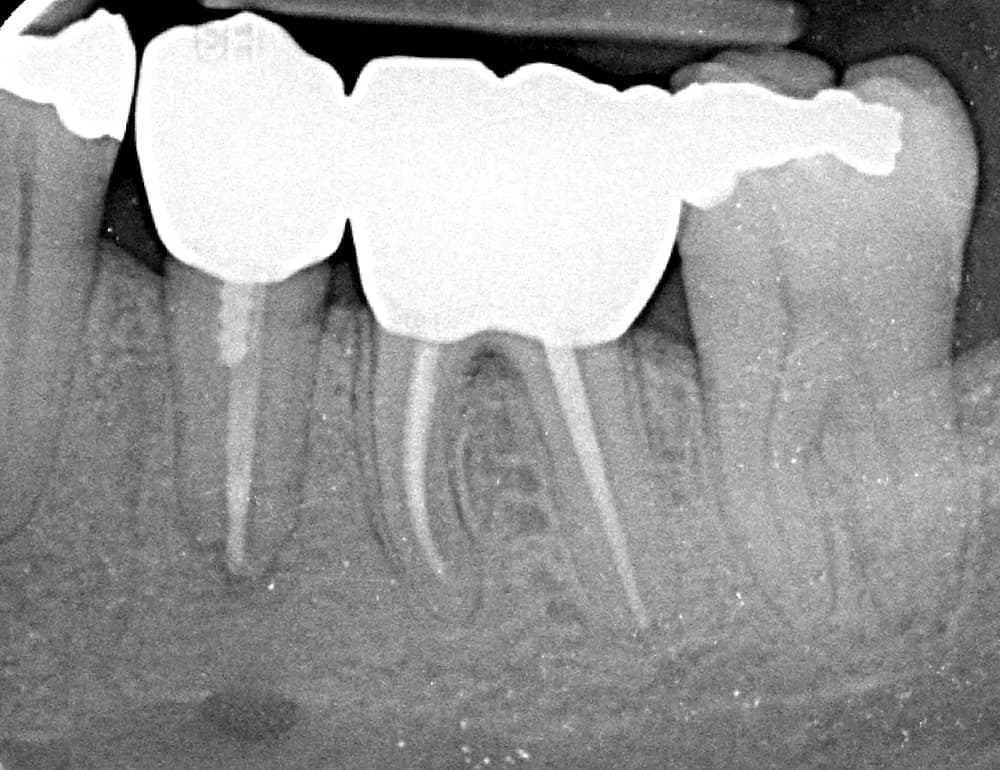
Saving teeth with root canal treatment
Endodontics · X-ray before and after
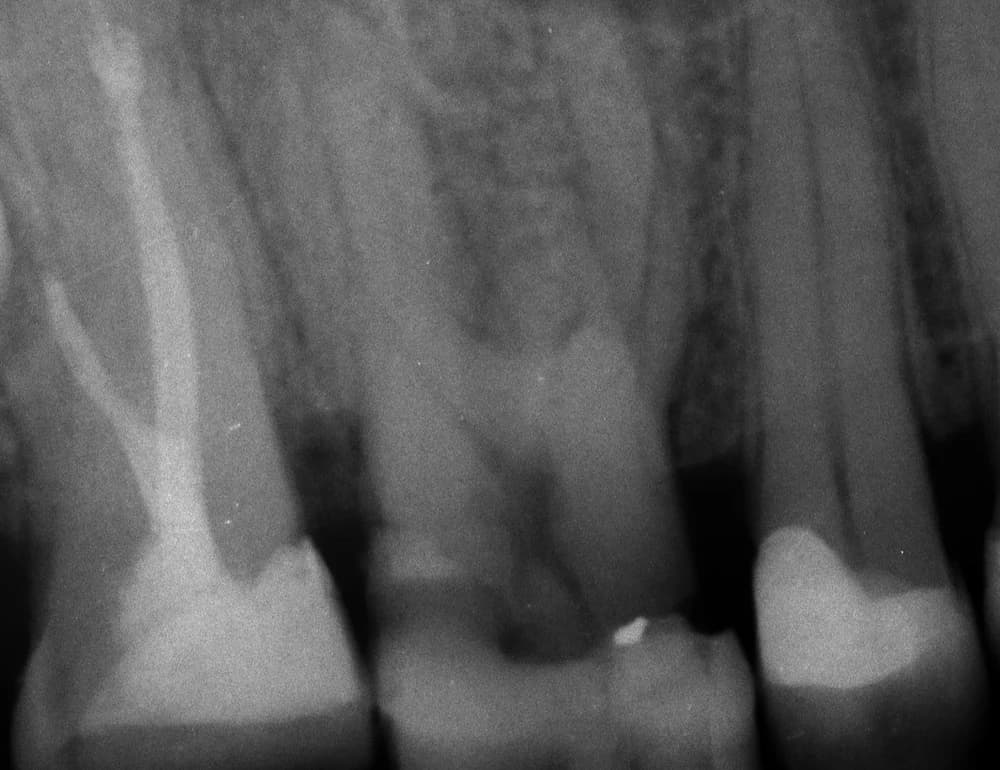
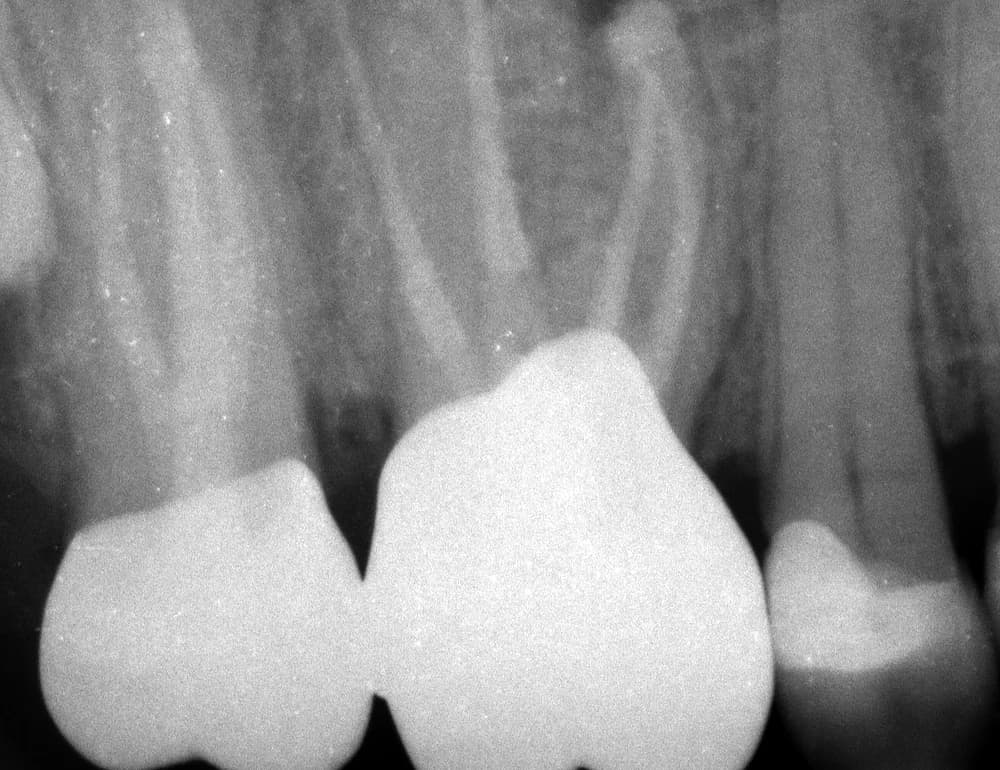
Microscopic endodontics and prosthetic reconstruction
Endodontics · prosthetics · X-ray
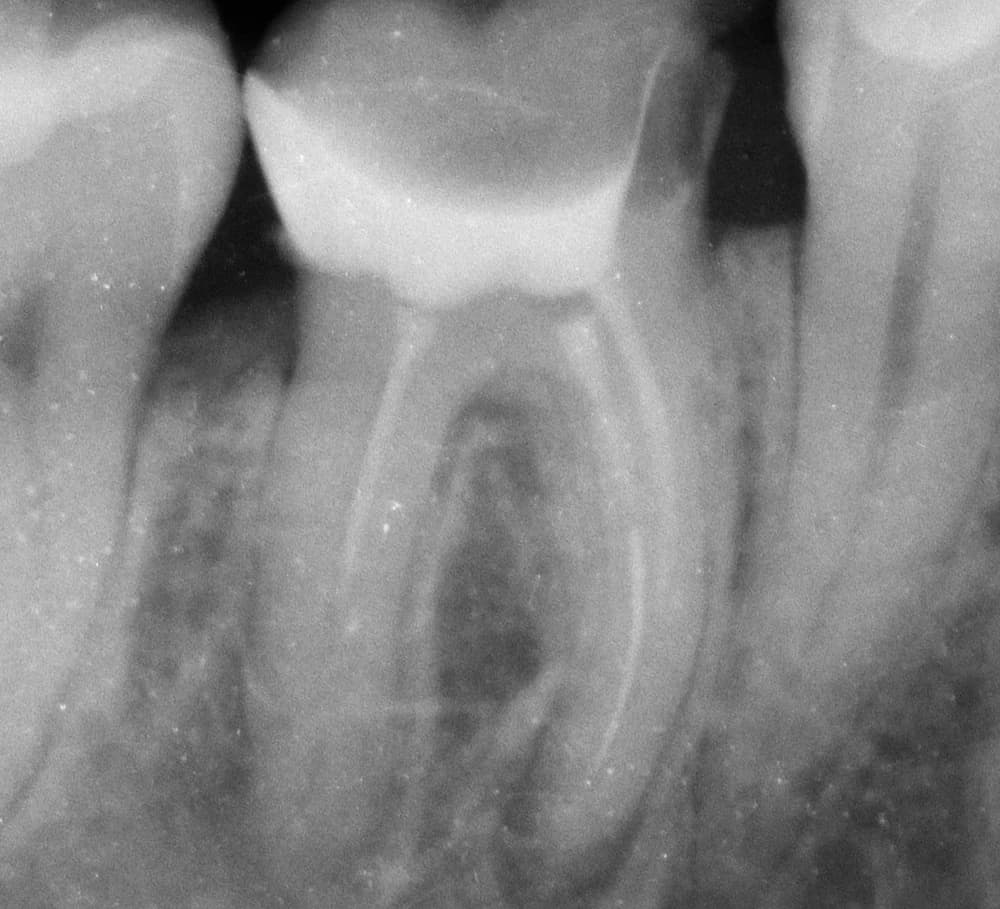
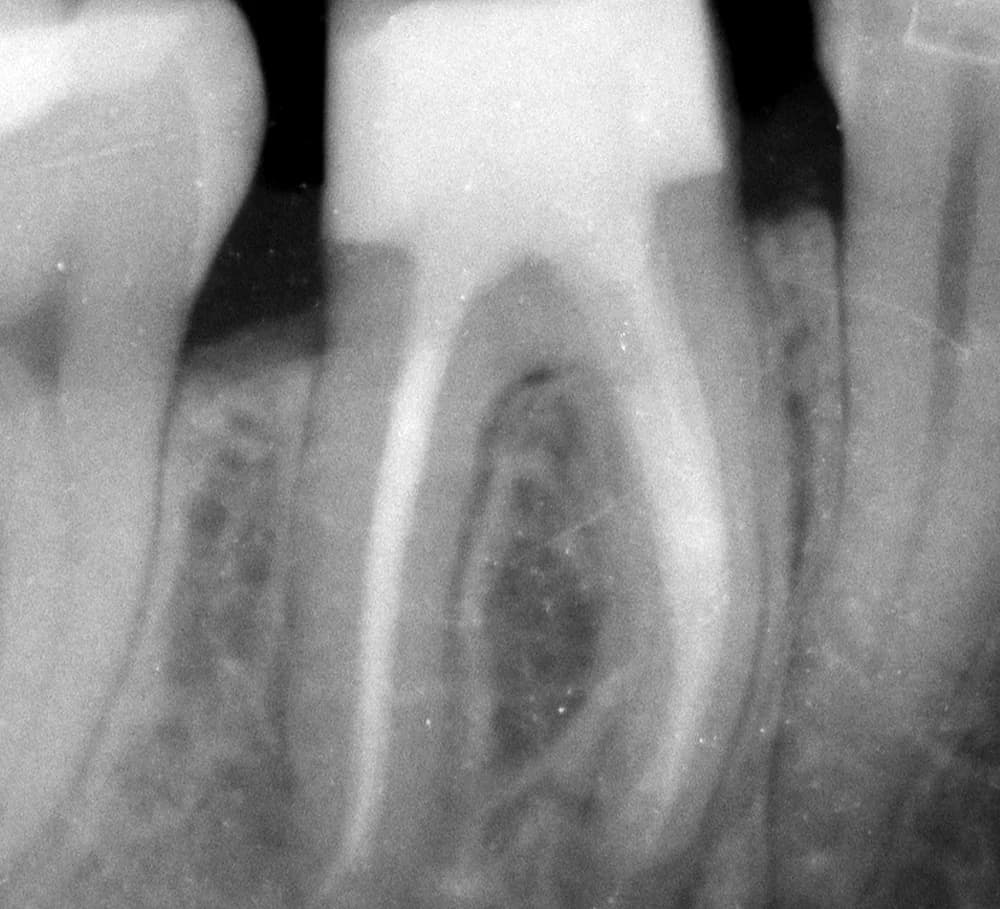
Removal of a broken instrument from a root canal
Endodontics · X-ray before and after
Decision principle
Save the tooth, or replace it with an implant?
What decides is the predictability of the result, not technical possibility. We keep a tooth if its root can be reliably treated, the crown part rebuilt and the gum and bone around it kept healthy. If not, it is more honest to remove it and plan a replacement.
- —Enough healthy hard tissue above the gum (ferrule).
- —A root without a crack or extensive resorption.
- —Canals that can be fully treated.
- —Stable periodontium and enough bone around the tooth.
- —The tooth has a clear role in the plan.
- —A vertical root fracture.
- —Destruction deep below the gum with no possible ferrule.
- —Marked loss of periodontal support and mobility.
- —An untreatable perforation or a broken instrument in an inaccessible part.
- —Saving it would endanger the stability of the whole planned reconstruction.
We always show you the X-ray and explain what we see. If the prognosis is uncertain, we say so — including how likely it is that the tooth can be kept.
What we do
From a first root canal treatment to microsurgery
When to come
Symptoms you shouldn’t put off
Root inflammation does not always hurt. Some teeth only show up once the infection has damaged the surrounding bone.
- —Pain when biting or pressing on the tooth.
- —Throbbing pain that wakes you at night.
- —Sensitivity to heat that fades slowly.
- —Swelling of the gum or cheek.
- —A fistula — a small opening on the gum.
- —A tooth turning darker.
- —A tooth after an injury, even without pain.
- —A finding on an X-ray you know of from another clinic.

Who will treat you
MDDr. Patrik Žoldoš, MSc.
Founder and head of the clinic
He does microscopic endodontics, surgery and implantology. That is why he can weigh “save or replace” from both sides — with no reason to lean towards one solution just because he doesn’t offer the other.
He completed postgraduate training in implantology in Germany, at Goethe University Frankfurt (Master of Oral Implantology).
FAQ
About saving teeth
Is my own tooth really better than an implant?+
In most situations yes — if it can be predictably treated and restored. Your own tooth has a periodontal ligament that cushions load and carries sensation; an implant has none. The tooth also preserves the bone where it stands.
An implant is an excellent solution where a tooth cannot be saved. It is not a contest between methods but about using each in the right place.
Does root canal treatment hurt?+
It is done under anaesthesia and its aim is to remove pain, not cause it. Afterwards the tooth may be sensitive to pressure for a few days, especially if there was active inflammation around it.
When can a tooth no longer be saved?+
Usually with a vertical root fracture, destruction deep below the gum with no possible ferrule, marked loss of periodontal support or an untreatable perforation. We then explain the alternatives, including extraction and an implant, before we start.
Does a root-filled tooth always need a crown?+
Back teeth usually do — a crown or partial restoration protects them from splitting. For front teeth with little damage a smaller restoration is sometimes possible.
What if a previously treated tooth is inflamed again?+
Repeated inflammation does not automatically mean losing the tooth. Most often there is an untreated or missed canal or a leaking filling. We assess it on CBCT and propose retreatment, microsurgery or another solution.
How much does saving a tooth cost?+
It depends on the number of canals, the anatomy, whether it is a first treatment or retreatment, and the restoration afterwards. Root canal treatment under the microscope starts at 13 000 CZK (≈ €520). You get a specific budget after the examination, before treatment starts.
Were you told your tooth can’t be saved?
We are happy to look at it. Sometimes there is a way to keep the tooth — and sometimes we confirm that replacing it is more sensible. We explain both on the X-ray.
The online booking form is in Czech — you can also email info@d3nt.cz or call +420 777 585 233.